40,000+
deaths per year worldwide
Dengue, chikungunya, Zika — arboviral diseases in continuous expansion.


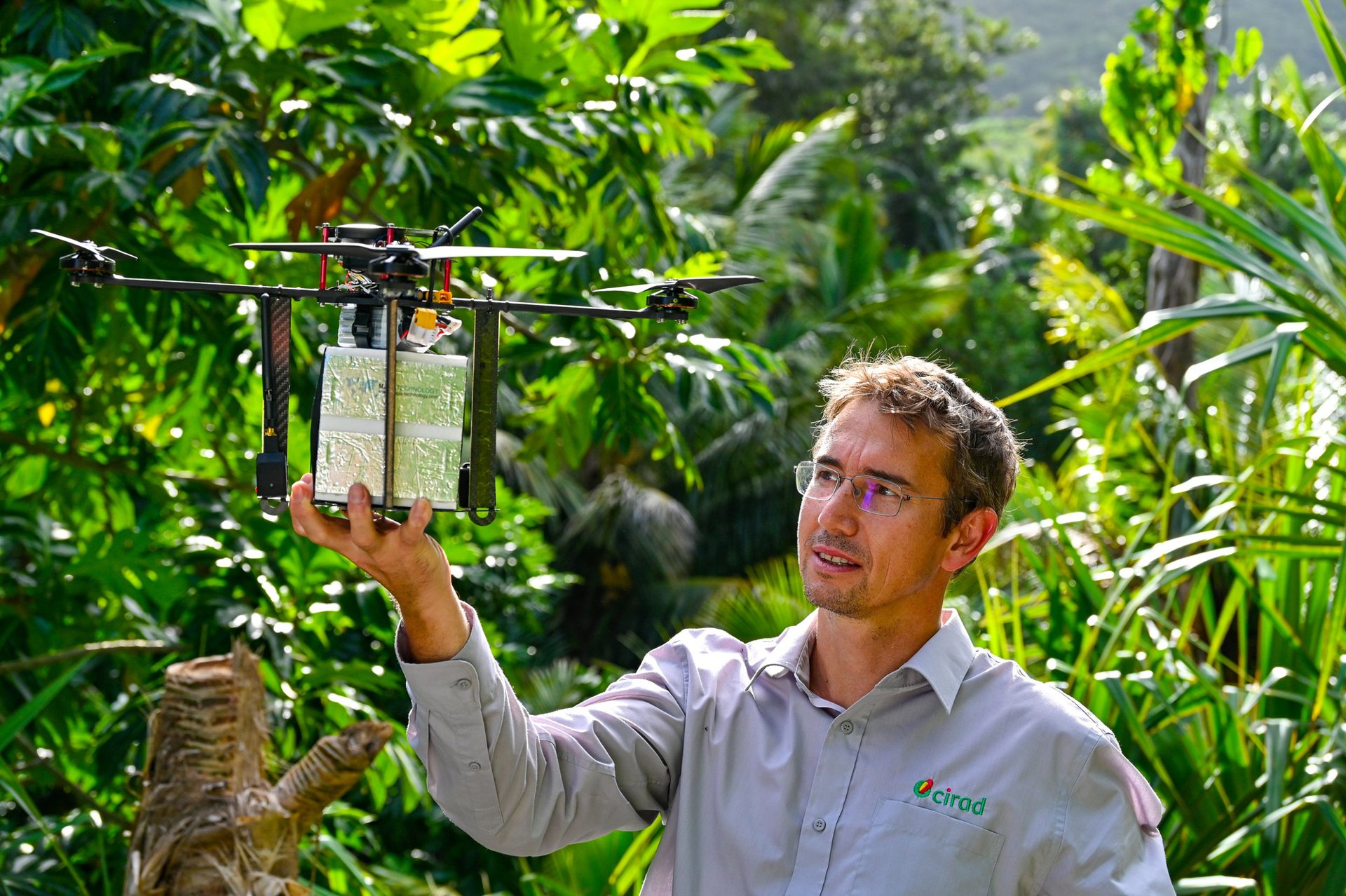
CIRAD spin-off · DeepTech · Pre-commercialisation
The Boosted Sterile Insect Technique turns the sterile male into a larvicide carrier. It reaches the breeding sites that no conventional method can treat — and brings populations down for good.
01 — The problem
Vector of chikungunya and dengue, with recurring epidemics in the French overseas territories and emerging ones in mainland Europe. A lightning-fast invasion, accelerated by global warming. In mainland France, more than 4,000 municipalities are now colonised.
40,000+
Dengue, chikungunya, Zika — arboviral diseases in continuous expansion.
€3bn
Every year, worldwide (IRD / CNRS).
€70bn
Including long-term after-effects (IRD / CNRS).
Individual, temporary protection. No collective solution, no reduction in mosquito populations.
Effective but harmful: 1 droplet in 1,000,000 reaches its target. Growing resistance.
Costly and ineffective: they do not reduce populations and never reach the larvae.
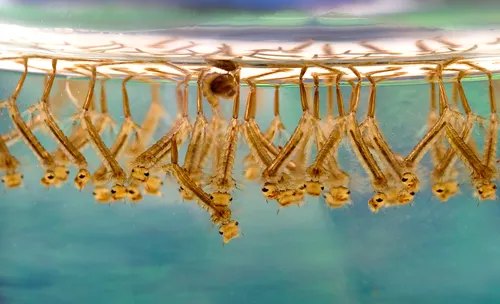
The heart of the problem lies in cryptic breeding sites — out of reach of every conventional method. That is exactly where MoSITouch acts.
02 — The solution
The mosquito itself becomes the treatment agent. It carries infinitesimal amounts of larvicide into the heart of breeding sites that neither people nor machines can reach.
Industrial production of males at scale and at a controlled cost.
Males are sterilised before release: they can no longer produce viable offspring.
The sterile males are then coated with a larvicide formulation recognised as safe by the WHO, with no effect on their competitiveness.
AI-optimised release from a standard vehicle or from an aerial or ground drone.
The males mate with wild females, which carry the larvicide into cryptic breeding sites.
Over 80% reduction from the first season, with no rapid repopulation.
Impact · One Health
Fewer vector-borne diseases, without exposing people to chemical insecticides.
Reduced transmission of mosquito-borne animal and zoonotic diseases.
Targets only the invasive tiger mosquito: no impact on pollinators or non-target wildlife. Zero mass spraying, and therefore an end to soil and water contamination by pyrethroids.
Contributes to the UN Sustainable Development Goals — no. 3 (health), no. 13 (climate), no. 15 (biodiversity).
03 — The evidence
From peer-reviewed publications to operational deployment: the technology has left the lab.
Scientific Reports · 2025
80% reduction of Aedes aegypti in Reunion Island and over 90% of Aedes albopictus in Spain.
Scientific Reports · 2025
85 – 93% reduction in egg hatching in an urban area.
Phase III trial · under way
Full-scale deployment 2025-2026, led by CIRAD and IRD.
Competitive advantage
Efficacy ratio established by modelling (Pleydell & Bouyer, 2019).
| Classic SIT | MoSITouch — Boosted SIT | |
|---|---|---|
| Releases / month | 4 to 12 | 2 to 4 |
| Male density / ha | > 15,000 | < 1,000 |
| Buffer zone required | ≈ 10% | 0% |
| Efficacy | Variable | 80% |
| Minimum area | 50 ha | 10 ha |
| Compensation | Risk of compensation | No risk of compensation |
| Target cost / ha / year | €1,000 – 2,500 | €400 – 500 |
A target cost of €400 to €500 per hectare per year, compared with €1,000 to €2,500 for classic SIT.
04 — Technology asset
An integrated stack developed in-house, hard to replicate — and the direct lever behind our competitive cost.
Density maps from satellite imagery (Sentinel Hub) and CIRAD predictions (Arbocarto).
AI computes the route and the number of males to release, point by point.
Automated control of every vector: drone, ground vehicle, connected release box — Cicindela-compatible.
Computer vision (YOLO) to monitor field captures.
Field app (PWA) and AI assistant for technicians, in real time.
05 — The team
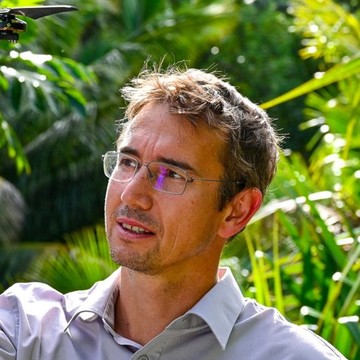
Chief Scientific Officer · Co-founder
Inventor of the Boosted Sterile Insect Technique. Research Director at CIRAD, with more than 25 years in ecology and vector control. He led the Human Disease Vectors group at the Joint FAO/IAEA Insect Pest Control Laboratory for 7 years and provided technical support to 32 national SIT programmes — more than 80% of programmes worldwide.
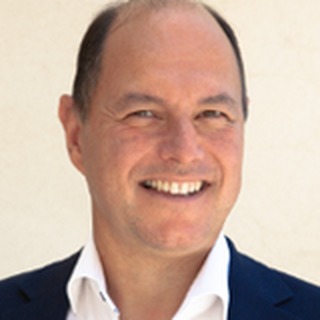
Chief Executive Officer · Co-founder
ESSEC graduate, 30 years in investment banking in London, Paris and Frankfurt. Partner at Exane, ranked among the top 3 sell-side analysts worldwide for 15 years. He leads financing, fundraising and commercial deployment.
A network of leading partners












06 — Investors
Media coverage
Introduce yourself in a few lines and we will send you the full investor presentation. Detailed business plan, valuation and data room available afterwards, under NDA.
07 — Frequently asked questions
The Boosted SIT (Boosted Sterile Insect Technique) is an evolution of the classic SIT, invented by Dr. Jérémy Bouyer. Male tiger mosquitoes are first sterilised, then coated with a larvicide before being released. When they mate, they sterilise wild females and transfer the larvicide to them, which the females carry into cryptic breeding sites — out of reach of every conventional method.
Over 80% reduction of Aedes aegypti in Reunion Island and over 90% reduction of Aedes albopictus in Spain. Two papers published in Scientific Reports in 2025 report over 80% suppression of adult females in field trials in France and Spain, and an 85 to 93% reduction in egg hatching in an urban area in Greece. A phase III trial on 175 hectares is under way in Reunion Island, led by CIRAD and IRD.
The target cost of the Boosted SIT is €400 to €500 per hectare per year, compared with €1,000 to €2,500 for a classic SIT. This is achieved through much lower release densities (fewer than 1,000 males per hectare) and fewer releases per month. The minimum treatable area is 10 hectares.
There is no mass spraying: the larvicide is delivered directly into breeding sites by the mosquito itself, in infinitesimal quantities. With a conventional insecticide, one droplet in a million reaches its target. The method only targets the invasive tiger mosquito and has no impact on pollinators or non-target wildlife.
Pyriproxyfen is an analogue of the insect juvenile growth hormone: it prevents larvae from developing into adults. It is harmless to humans and their environment.
MoSITouch SAS is a CIRAD spin-off based in Reunion Island, co-founded by Dr. Jérémy Bouyer, inventor of the Boosted SIT and former head of the Human Disease Vectors group at the Joint FAO/IAEA Insect Pest Control Laboratory, and by Sami Kassab, former partner at Exane.
MoSITouch is at the pre-commercialisation stage and is in discussion with investors. Interested investors can request the pitch deck; detailed information is shared after signing a non-disclosure agreement.
Contact us
MoSITouch SAS — CIRAD spin-off, Reunion Island.
Local authorities, private operators, partners, journalists or investors: write to us and we
will get back to you quickly.
Thank you. We will get back to you shortly at the address provided.